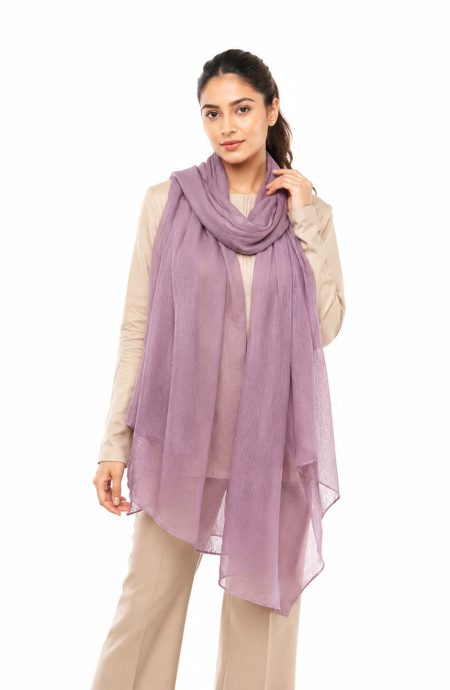
A cashmere scarf 40 inches wide and 80 inches long covers just over two square meters. This one weighs 70 grams across that area, approximately 34 grams per square meter. Cotton t-shirt jersey typically runs 150 to 180 grams per square meter, so this cloth is roughly a fifth the weight, across more than twice the area of a t-shirt.
That number is the whole product. It is why the featherlight scarf folds into a coat pocket, why it sits under a jacket collar without adding bulk at the neckline, and why it is wearable in June as well as December.
One Scarf. Every Season.
We have made bespoke tailoring for twenty-five years, and how a scarf behaves under a jacket collar is a tailoring question before it is a cashmere one. Seventy grams adds warmth at the neck without adding a fold of bulk under a lapel — the difference between a scarf that works with a tailored coat and one that fights it.
The same weight is what makes it practical on a flight, in an over-cooled office, at a summer wedding, or folded into a bag on the chance the evening turns. It is not a winter scarf, and we would not sell it as one — for genuine cold our heavier handwoven shawls or hand-felted wraps will serve you better.
Three ways it is actually worn, all of them possible because of the same thing — 40 inches of width at 70 grams. A fourth is worth mentioning: two square meters of cashmere covers you on a flight or during a nap, which is what people mean when they say they never travel without it.
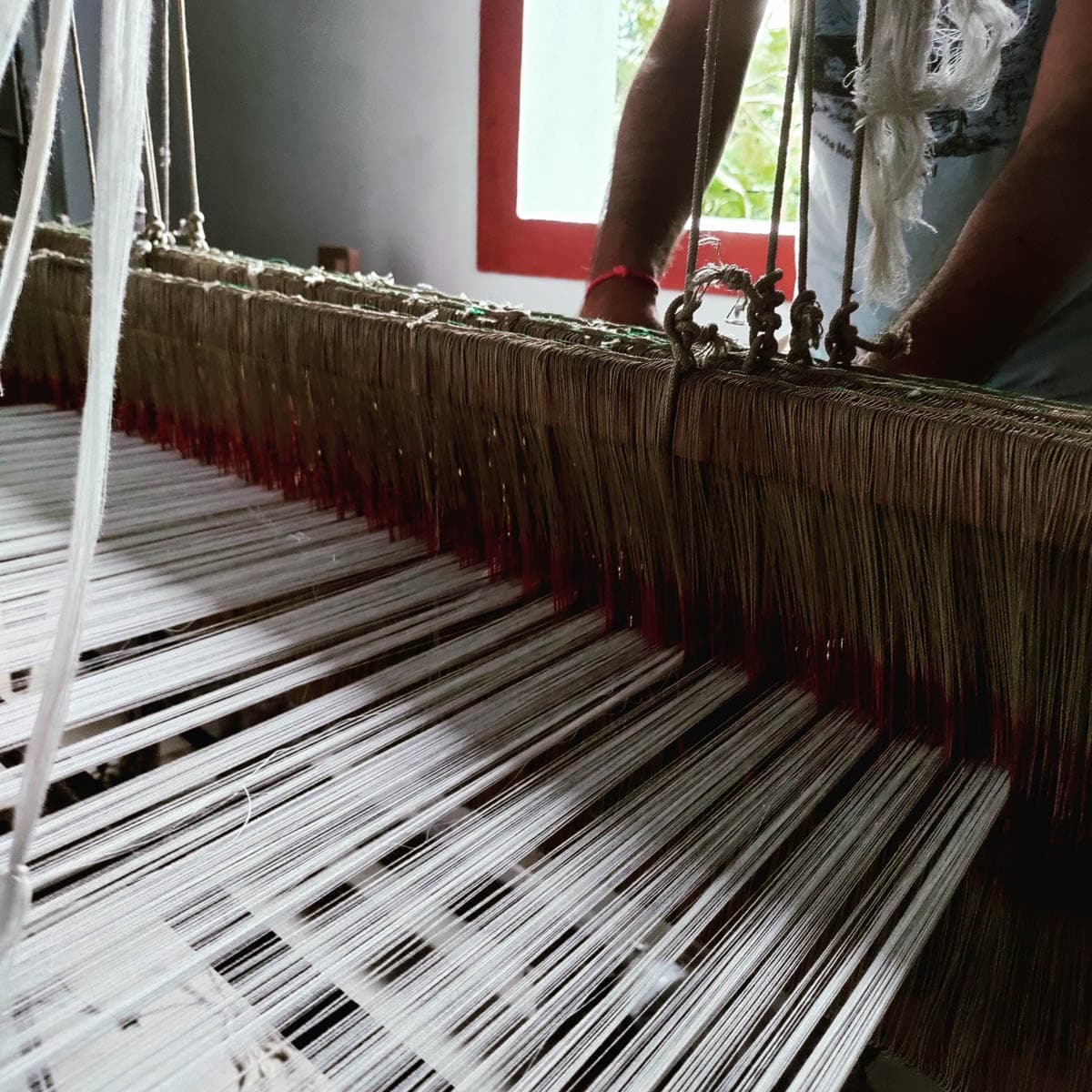
Hand-spun yarn varies slightly in thickness along its length. At 34 grams per square meter there is no margin to absorb that variation, so the weaver compensates by feel, adjusting beat and tension row by row. A power loom holds one fixed tension and snaps yarn this fine, which is why mill-made lightweight cashmere is spun coarser to survive the machine.
Each piece takes about five days on a traditional handloom in our Kathmandu workshop. We have worked with the same workshop for twenty-five years, and every garment is made by a human tailor whose name we know.
Q. How can a full-size cashmere scarf weigh only 70 grams?
A. Three specifications, working together. The fiber measures 14 to 16 microns, fine enough to spin very thin. The yarn is spun to a 200/2 count — two ultra-fine singles twisted together, where the twist supplies the strength a thread that fine would otherwise lack. And the weave is deliberately open, a gossamer structure with air between the threads rather than a dense cloth. The result is roughly 34 grams per square meter across 40 by 80 inches. For comparison, cotton t-shirt jersey usually runs 150 to 180 grams per square meter.
Q. How small does it fold down?
A. Small enough to sit flat in one open palm, and small enough to slip into a trouser or coat pocket rather than needing a bag. That is the whole 40 by 80 inch scarf folded, not a corner of it. The photographs above are not staged with a smaller sample — a fine open weave at 70 grams simply compresses to almost nothing, which is why people carry this piece when they would leave a heavier wrap at home.
Q. Is a scarf this light actually warm?
A. Warmer than its weight suggests, but it is not a winter scarf and we would not sell it as one. Cashmere insulates by trapping air rather than by mass, and an open weave traps a surprising amount. In practice this piece is right for cool rather than cold: flights, air-conditioned offices, evenings in spring and autumn, a summer wedding. For genuine winter cold, our heavier handwoven shawls or the hand-felted wraps will serve you better, and we would rather point you there than have you disappointed.
Q. What does a 200/2 yarn count mean?
A. The first number describes how fine the spun yarn is — the higher it is, the thinner the thread. The second number is how many of those threads are twisted together. So 200/2 is two very fine singles plied into one yarn. The twist matters: a single unplied thread at this fineness would break under loom tension, which is why very light cashmere is either plied like this or spun coarser to survive the process. It is also why the finished cloth resists pulling apart despite weighing almost nothing.
Q. Will a cloth this fine pill or snag?
A. Less than heavier cashmere, which surprises people. Pilling is caused by short fibers working loose from the yarn and tangling — it is a function of staple length, not of weight. These fibers run 35 to 55mm, long enough to stay anchored. What a fine open weave is more vulnerable to is snagging on rough jewelry, watch clasps or handbag hardware, so take reasonable care around those. Light surface pilling in the first few wears is loose fiber shedding and stops; remove it with a cashmere comb, never a razor.
Q. Can you hand wash a featherlight cashmere scarf, or is it dry-clean only?
A. Hand wash it — it is not dry-clean only, and hand washing is the better method. Use cool to lukewarm water with a wool or cashmere shampoo, do not wring, press the water out in a towel and dry flat in shade. Cashmere genuinely improves with washing as the fibers bloom and the handle softens. Dry cleaning solvents strip the natural lanolin that keeps cashmere supple, which is why frequently dry-cleaned pieces begin to feel papery over time.
Q. Is it big enough to use as a shawl or a travel blanket?
A. Yes to both. At 40 by 80 inches it is full shawl width, worn open across the shoulders or wrapped across the body, and it is long enough to use as a light blanket on a flight or for a nap. That combination — full coverage at 70 grams — is the reason people carry it when they would not carry a heavier wrap. It folds small enough to sit in a coat pocket or a handbag without taking up meaningful space.
Q. Can it be monogrammed?
A. Yes, and a plain-woven solid piece is the easiest kind to embroider well, because there is no pattern for the thread to compete with. We embroider single pieces as well as sets — initials, a name, a date, or your own logo. Email the initials or your artwork to contact@baronboutique.com and we will come back with a quote and a stitch proof before anything is sewn. Note that a lighter thread is used on cloth this fine, so the lettering sits flat rather than proud of the surface.



















Candy Parker –
very thin but goodI was a little afraid of putting an order on the website, but I had to because the price is resonable. I was so excited when it came yesterday. This pastel green scarf is soft, warm and razor-thin. It is worth every cent for me.
Linda Klusner –
practicalThis is multi-purpose, practical and elegant. The solid color goes with just about anything. I like wearing it around my shoulders, but it also works really well as a headscarf. It is great for a little summer breeze at the beach or when it gets a bit cool at an evening concert.
Darren Williams –
perfect to have it anywhereThis scarf is perfect to keep in the car, at the office, or just carry around with you. I have been using mine every day since I got it, and honestly I never liked the idea of wearing a scarf before! It is so cozy and fun to wear and it looks really good too.